
After the Fall: The Part Too Many Safety Programs Forget
Most folks think the story ends when the harness catches someone. I wish that were true. In my years in construction, emergency response, and now consulting, I’ve learned the hard way that the fall is only the start of the trouble. What happens in the minutes after a fall can determine whether a worker walks away or leaves in an ambulance.
OSHA regulations 29 CFR 1926 Subpart M and 1910.140 make it clear that fall arrest systems must include a means for prompt rescue. Yet in practice, rescue is often treated as an afterthought. Companies may buy the gear, hand out the harnesses, and figure the rest will sort itself out. It doesn’t.
I still think about a day on a construction site when a worker stepped onto a scaffold that had a yellow tag. Everyone knew it required full tie‑off. He climbed up there to grab something he left behind and forgot to clip in. There was an open hole in the deck and he went straight through it. The only thing between him and a forty‑foot drop was his own arms hooked over the level below. Nobody noticed until he started yelling. By the time the crew pulled him back up, he was exhausted and shaking. If he had slipped even a little, we would have been calling his family.
That moment stuck with me because it showed how thin the line can be and how unprepared we were. Although the crew reacted quickly, they didn’t have a plan. It was luck and adrenaline.
If the worker had been suspended in a harness, the situation could have escalated just as quickly. Instead of catching himself, suspension trauma could have set in within minutes. Blood pools in the legs, circulation is compromised, and the worker can pass out. Without a plan, even a “successful” fall arrest can turn into a medical emergency.
A complete fall protection program has to look beyond the fall. It needs to answer practical questions that are often forgotten.
- Who calls for help?
- Who performs the rescue?
- How will the worker be reached and retrieved?
- What happens if the person loses consciousness?
- What if access is limited or equipment can’t reach the worker?
These aren’t wild scenarios. They’re the kind of things that happen on job sites every day.
Truly effective rescue planning includes clearly defined roles, reliable communication, and realistic training. I’ve walked into plenty of plants and warehouses where the rescue plan was a binder on a shelf. In an emergency, that binder is useless. Crews should understand their responsibilities and be able to react automatically. The first time they practice shouldn’t be when someone is hanging thirty feet up.
Fall protection is a system of planning, prevention, restraint, arrest, and rescue all linked together. If one link is weak, the whole thing fails. The traditional ABCD approach (anchor, body harness, connectors, and descent) only works if the rescue piece is ready to go. A harness without a rescue plan is like sounding a fire alarm with no exit; it addresses the risk but neglects the outcome.
Organizations that take rescue seriously consistently achieve better outcomes. They treat it as part of the job, not a compliance exercise. They train on it, talk about it, and make sure their teams understand that stopping the fall is only the first step.
If you’re building or evaluating your fall protection program, take a hard look at what happens after the fall. Can your team perform a rescue quickly, safely, and without hesitation? If the answer isn’t a confident yes, then the system isn’t complete.
Contact Walden’s EHS team at 860-846-4069 to review your fall protection plan, including the rescue component, with an experienced professional.
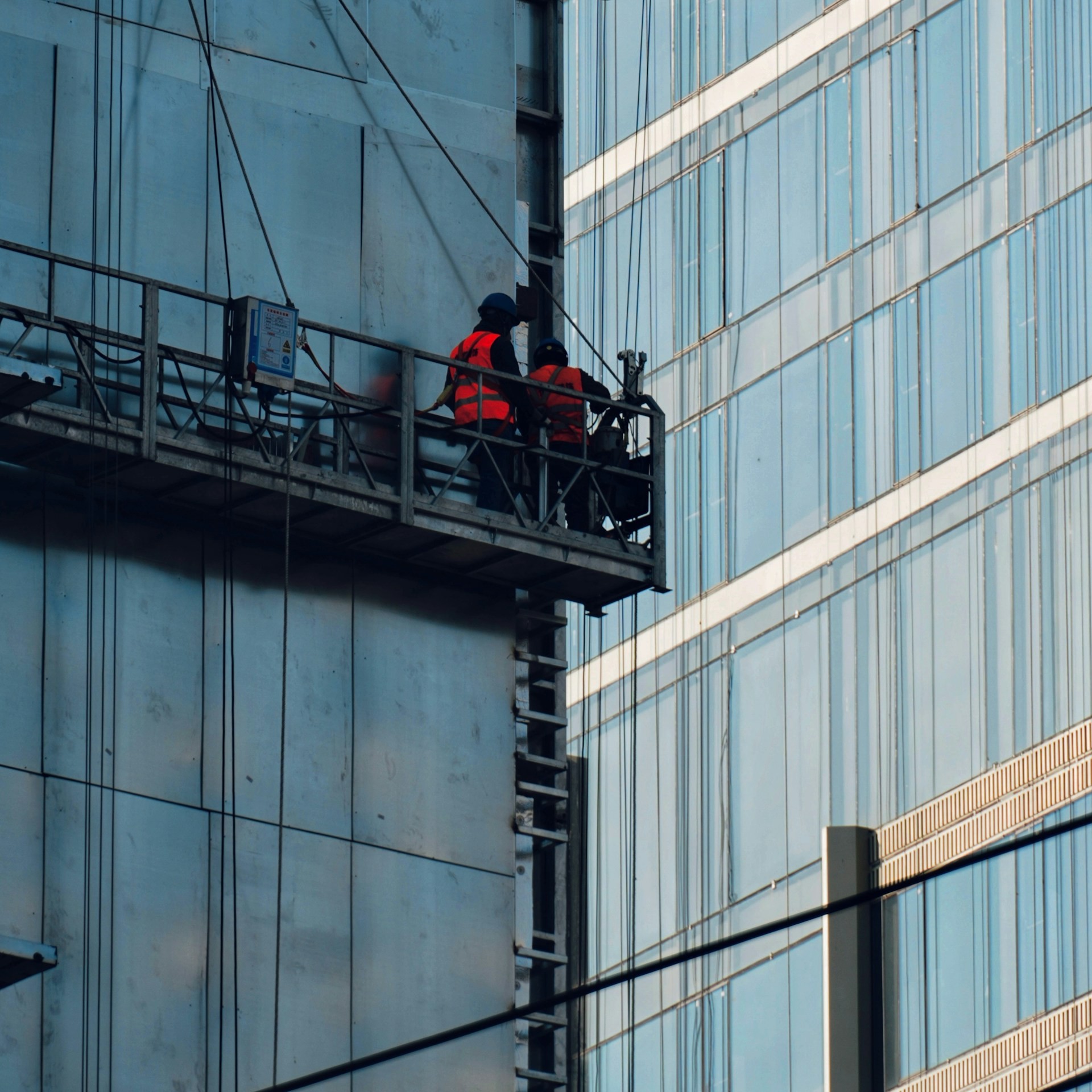
Photo by Xander Tan on Unsplash
For help developing any (or all) aspects of your fall protection plan, including the rescue component, contact Walden’s experienced EHS team at 860-846-4069.