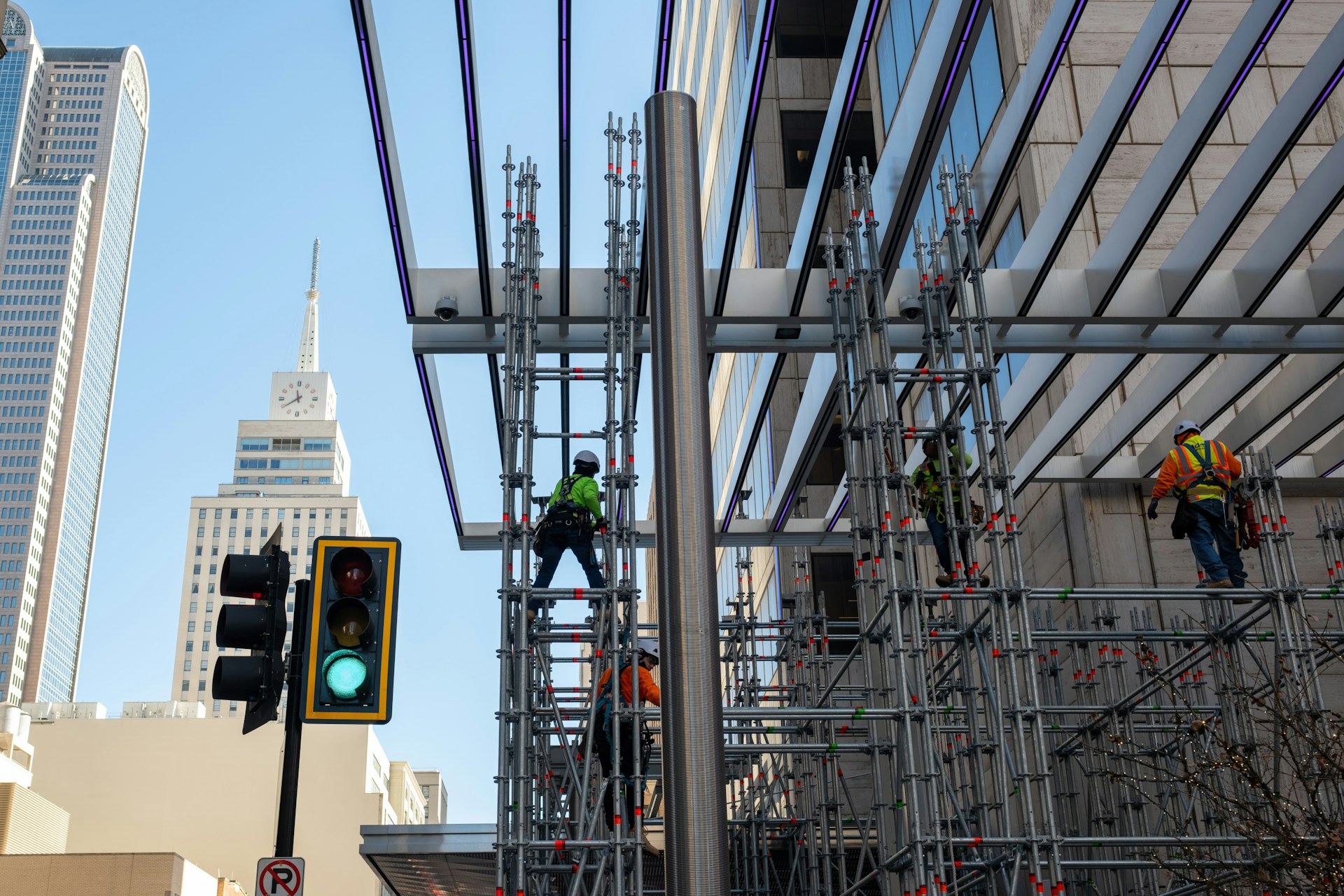
Before the Harness: Why Fall Prevention Has to Start in the Planning Trailer
Imagine you’re standing on the top step of a ladder and it starts to wobble. In that moment, you’re not thinking about fall protection planning, you’re reacting. If your first fall protection decision happens at the edge of a platform or the top of a ladder, you haven’t just missed a step, you’ve missed a critical part of the job.
While safety is meant to be preventative, fall protection in the field often defaults to the “save.” Most job sites start with personal protective equipment (PPE) because it provides a tangible sense of safety. Training focuses on the harness fit, lanyard inspections, and anchor point integrity, and everyone feels covered. However, we know from the Hierarchy of Controls that PPE is actually the least effective method of protection.
Although PPE is an important component, the true intent of fall protection planning is to eliminate the hazard instead of working around it. If you’re relying on a harness to save a life, the system has already reached its point of last resort.
Effective planning starts before the work begins. It shifts the focus from reacting to hazards to preventing them altogether. This approach allows teams to move up the hierarchy toward elimination and substitution, so that by the time a worker is putting on a harness, the risk has already been engineered out, reduced, or avoided entirely.
So, how can you make sure your team is conducting fall protection planning effectively? Start by asking the right questions:
- Can this work be completed from the ground?
- Can trades be scheduled to avoid stacking work in the exposed areas?
- Can components be prefabricated off-site to reduce time at elevated heights?
- Can lifts or extendable tools be used to keep workers away from the edges?
Planning work to avoid exposure will always be more effective than trying to control it after the fact. When we plan for safety, we’re not just checking a box. We are protecting the people doing the work. Harnesses are a necessary part of fall protection, but they should serve as a backup plan, not the only plan. The safest fall is the one that never happens.
How Walden Can Help
Walden works with businesses to identify fall hazards, evaluate opportunities for hazard elimination, and implement practical engineering and administrative controls. We also provide employee training, fall protection equipment inspections, program development, and other compliance support to ensure that your fall protection strategies align with regulatory requirements.
Contact our Environmental Health and Safety team today at 860-846-4069.