
Reissuance of OSHA’s National Emphasis Program (NEP) on Amputations
OSHA’s National Emphasis Program (NEP) on Amputations in Manufacturing Industries is a data‑driven initiative whose purpose is “to identify and reduce or eliminate amputation hazards in manufacturing industries.” Under this NEP, OSHA uses injury and inspection data to pinpoint the factories and operations where workers face the highest risk of losing fingers, hands, or limbs to unguarded machinery or energy‑control failures.
The program was reissued on June 27, 2025, under Directive CPL 03‑00‑027, superseding the 2019 NEP (CPL 03‑00‑022). This update refines industry targeting, inspection coding, and small‑employer exemptions to ensure that OSHA’s resources are concentrated where they can most effectively drive down amputation rates.
Why Does the NEP Exist?
Amputation incidents often result from unguarded machinery, inadequate maintenance, or failures in hazardous energy control (lockout/tagout) procedures. Historical data shows that even when standards exist (i.e., machine guarding and hazardous energy control), compliance lapses continue to lead to severe injuries and permanent disabilities.
The NEP targets establishments where these hazards are most prevalent, using both OSHA inspection data (OIS) and Bureau of Labor Statistics (BLS) amputation figures to focus resources where they can have the greatest impact on worker safety.
Key Changes in the 2025 Update
- Inspection List Refinement: Any establishment that had an inspection that was initiated under this NEP in the previous 24 months, with no reported amputations within those 24 months, may be deleted from the programmed inspection list. This change helps OSHA concentrate on higher‑risk workplaces and avoid duplicative inspections.
- Unprogrammed Inspection Expansion: Only unprogrammed inspections at sites whose NAICS code appears in Appendix B may be expanded into a full amputations NEP inspection. This ensures that OSHA’s rapid‑response inspections (e.g., complaint or referral investigations) remain focused on industries with demonstrable amputation risks.
- Small‑Employer Exemption: Establishments with 10 or fewer employees in “low‑hazard” industries (per the Annual Appropriations Act Directive) are exempt from this NEP. By excluding very small employers in low‑risk NAICS codes, OSHA can direct its efforts toward sites where machinery‑related hazards are most prevalent.
- OIS Coding Revisions: Refines how inspections are coded in the OSHA Information System (OIS), ensuring consistent data capture for both programmed and expanded amputations inspections. Accurate coding is critical for tracking enforcement outcomes and measuring the NEP’s effectiveness over time.
- Targeting Methodology and NAICS Updates: The Amputations Targeting Methodology (Appendix A of the Directive) was recalibrated using 2019–2023 OIS data and 2019–2022 BLS amputation rates, resulting in an updated list of 91 NAICS codes (including 21 new industry codes). This refinement leverages the latest data to identify high‑risk sectors more precisely.
With these updates, OSHA can deploy its compliance officers more strategically, maximizing the likelihood of uncovering unguarded machinery or lapses in procedures. Exempting low‑risk small employers helps reduce the burden on businesses where amputation hazards are unlikely, while new NAICS additions ensure that emerging risks are not overlooked. Improved OIS coding and data accuracy will allow OSHA to monitor trends more effectively, assess the NEP’s impact, and make data‑driven adjustments in future iterations.
Conclusion
Employers with more than 10 employees and whose operations fall under one of the six‑digit NAICS codes listed in Appendix B should be ready for a NEP inspection. Start by conducting a targeted self‑assessment of your machine guarding and lockout/tagout procedures, focusing on nip points, shear points, and any servicing or maintenance tasks where guards may be removed.
Next, ensure your OSHA 300, 300A, and 301 logs are accurate and up to date.
Finally, OSHA’s outreach window can be used to deliver concise, role‑specific training on amputation hazards to both management and frontline staff, reinforcing best practices in hazard recognition and energy control.
If that sounds overwhelming, we can help! Walden offers:
- Gap analyses against CPL 03‑00‑027 requirements,
- Customized machine guarding and lockout/tagout audits,
- OSHA injury‑and‑illness log updates, and
- Onsite or virtual training sessions.
Whether you need a onetime readiness review or a long-term compliance program, Walden’s experts can help you stay ahead of OSHA and keep your employees safe. Contact us at 860-846-4069 to discuss your needs with a safety professional today.
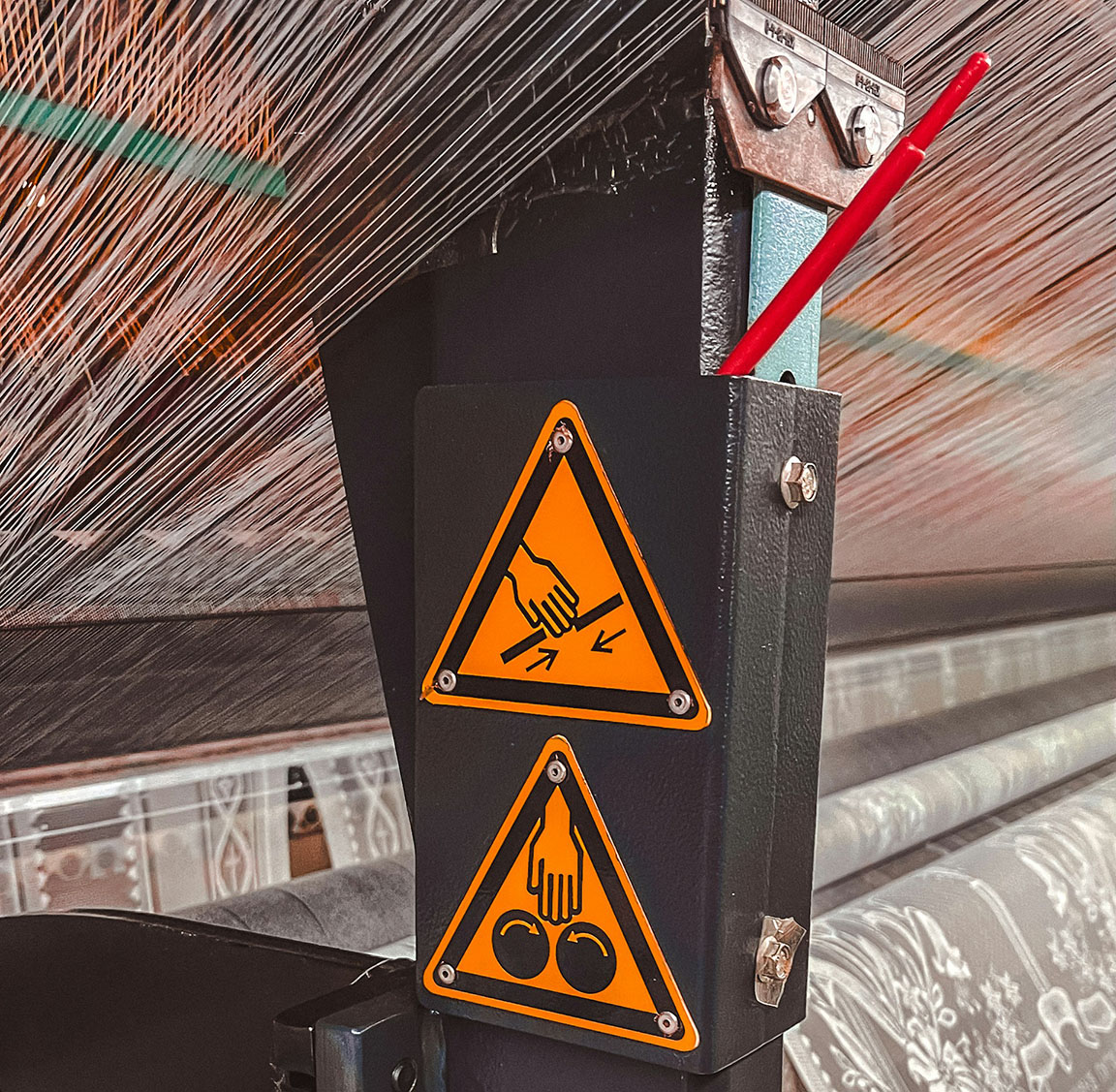
Photo by Vlad Hordiienko on Unsplash
Contact Walden’s EHS experts at 860-846-4069 for help complying with OSHA’s updated NEP on amputations.