
An Introduction to Confined Space Work
What Is a Confined Space?
There are two types of confined spaces: permit-required and non-permit-required.
A confined space is an enclosed space that:
- Is large enough and so configured that an employee can bodily enter and perform assigned work; and
- Has limited or restricted means for entry or exit; and
- Is not designed for continuous employee occupancy.
OSHA classifies a permit-required confined space (permit space or PRCS) as a confined space that meets the criteria above and has one or more of the following characteristics:
- Contains or has the potential to contain a hazardous atmosphere,
- Contains material that has the potential to engulf an entrant,
- Has an internal configuration such that an entrant could be trapped or asphyxiated by inwardly converging walls or by a floor which slopes downward and tapers to a smaller cross-section, or
- Contains any other recognized safety or health hazard (such as unguarded machinery, exposed live wires, or heat stress).
Confined spaces include, but are not limited to, tanks, vessels, silos, storage bins, hoppers, vaults, pits, manholes, tunnels, ductwork, pipelines, etc.
Confined Space Requirements
For general industry, OSHA regulates PRCSs under 29 CFR 1910.146, which first requires employers to conduct a workplace evaluation to determine if any spaces are permit-required confined spaces.
Note: OSHA provides appendix A to § 1910.146 to facilitate compliance with this requirement.
If there are PRCSs, the employer must inform employees and post signs noting the existence, location, and danger posed by the permit spaces.
The sign should read “Danger – Permit Required Confined Space, Do not enter” or similar language. The employer can choose to restrict access to the permit spaces and only let trained and authorized employees enter, or they can choose not to let any employees enter. If employees are authorized to enter, the employer must develop and implement a written permit space program and follow the requirements set forth by the standard. Exemptions and modifications are allowed under certain conditions [1910.146(c)(5)(i)].
Note: Appendix C to § 1910.146 presents examples of permit space programs.
A PRCS can also be reclassified as a non-permit-required confined space if the permit space poses no actual or potential atmospheric hazards and if all hazards within the space are eliminated without entry into the space.
If entry into the space is needed to eliminate hazards, entry must be performed under the requirements of the PRCS program [1910.146(d)].
If testing and inspection during that entry demonstrate that the hazards within the permit space have been eliminated, the space may be reclassified as a non-permit confined space for as long as the hazards remain eliminated.
Note: Control of atmospheric hazards through forced air ventilation does not constitute elimination of the hazards.
If a PRCS is reclassified, the employer must document the basis for determining that all hazards have been eliminated via a certification containing the date, location, and signature of the person making the determination.
Permit-Required Confined Space Entry
Anyone who is authorized to enter a PRCS must follow strict requirements. Some of these requirements include:
- Reading and being familiar with the written permit space program,
- Wearing proper PPE,
- Conducting atmospheric testing and/or other means necessary to eliminate or control atmospheric hazards (i.e., purging, inerting, flushing, or ventilating the space),
- Securing an attendant outside the permit space to monitor inside and outside activity during entry and exit,
- Determining rescue operations,
- And more.
Before entry is authorized, the employer must document the completion of measures required by preparing and completing an entry permit. The permit must then be posted at the permit space entry. A new permit must be completed for each permit space that is entered.
Note: Appendix D to § 1910.146 presents examples of permits whose elements are considered to comply with the requirements of 1910.146.
Training
The employer must provide training so that all employees who are involved with PRCS entry (entrants, attendants, and rescuers) acquire the understanding, knowledge, and skills necessary for the safe performance of their duties.
Training shall be provided:
- Before the employee is first assigned duties,
- Before there is a change in assigned duties,
- Whenever there is a change in permit space operations that presents a hazard about which an employee has not previously been trained, or
- Whenever the employer has reason to believe that there are deviations from the permit space entry procedures or that there are inadequacies in the employee’s knowledge or use of procedures.
OSHA does not explicitly require refresher training at a specific interval, but they do require an annual review of the written program. OSHA states that canceled permits must be retained for one year to facilitate the annual review.
Note: Employers may perform a single annual review covering all entries performed during a 12-month period. If no entry is performed during a 12-month period, no review is necessary.
Lastly, OSHA requires rescue personnel to perform practice rescues at least once a year. It is recommended as a best management practice that confined space refresher training be conducted every one to two years.
If you need help understanding confined space requirements, obtaining the necessary permits, and completing employee training, contact Walden at 860-846-4069 for assistance. Our experienced EHS team can provide all of these services for your operation.
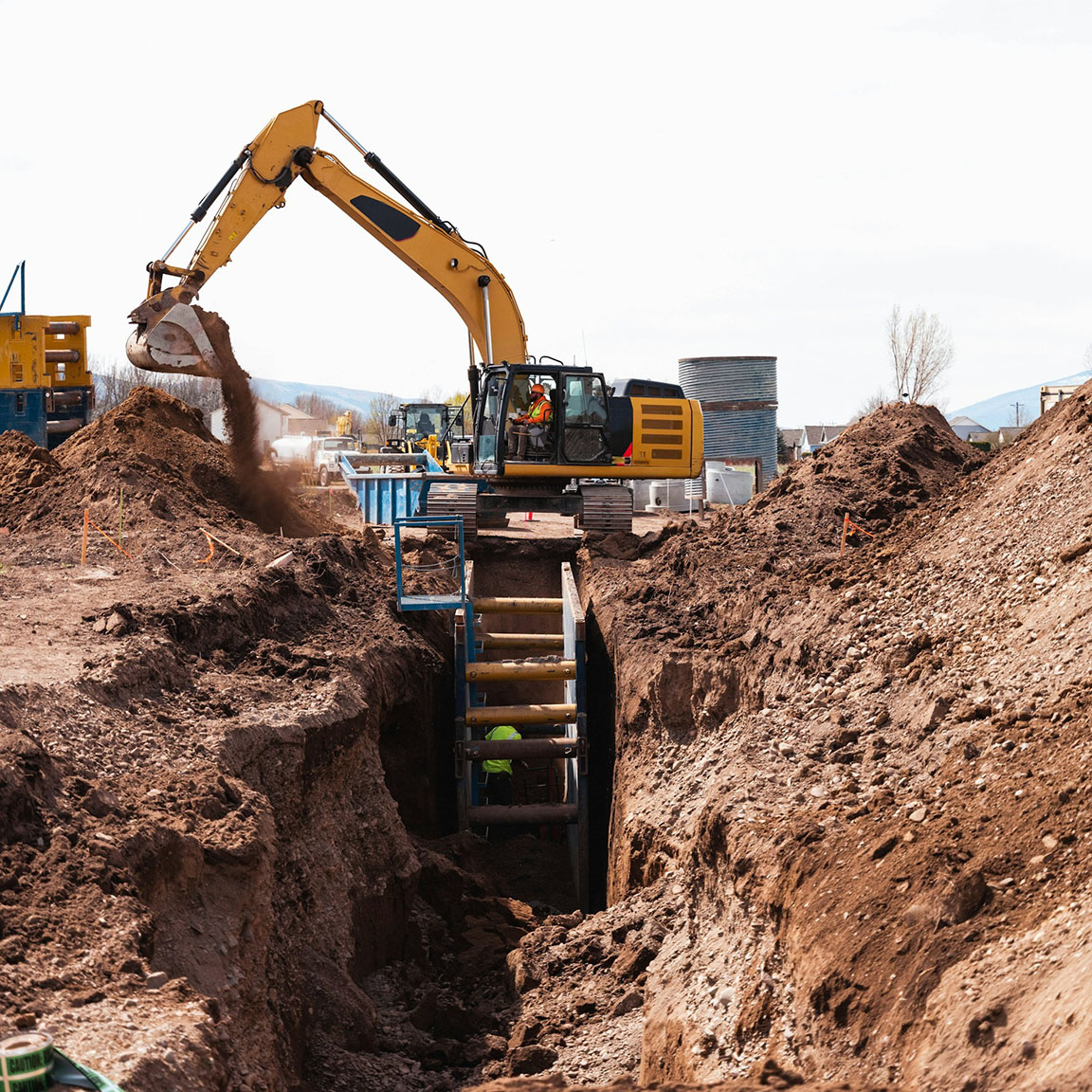
Photo by John Kakuk on Unsplash
Contact Walden’s EHS specialists at 860-846-4069 for further information on confined space requirements.