
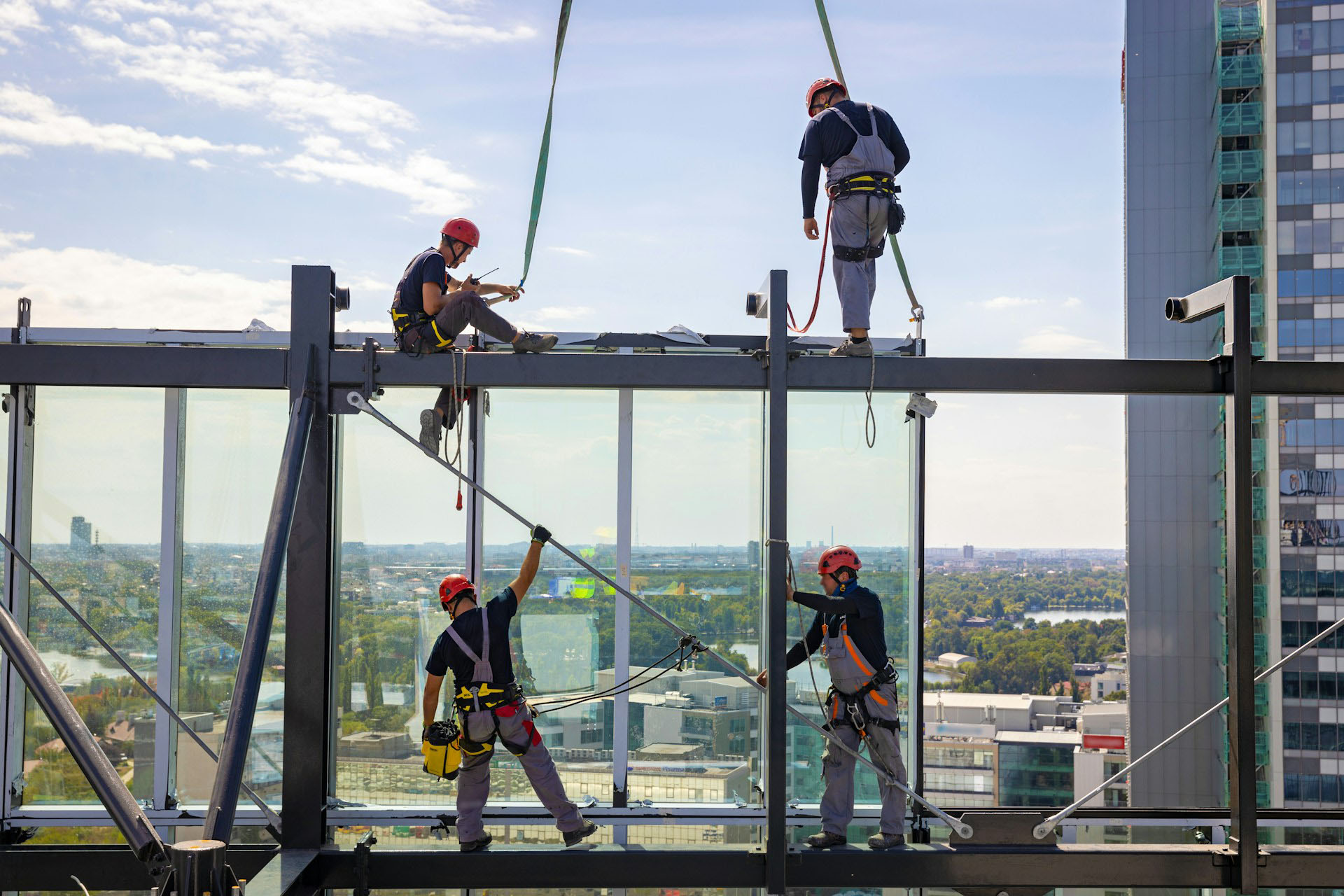
A well-written fall protection plan sitting in a binder is far less valuable than a practical plan that crews can actually execute on real jobsites. Too often, safety programs are designed to look good for an audit, but they fail to translate to the roof, the scaffold, or the structure once work is underway. Compliance on paper is not the finish line.
The Occupational Safety and Health Administration (OSHA) standards make it clear that fall protection is not just about having equipment available. It’s about using it correctly and effectively. Safety is often reduced to a checklist of equipment, but the real challenge lies in how those controls function.
Anchor points, for example, cannot be assumed or selected based on convenience. They must be accessible, properly rated, and positioned to support the actual task being performed. This includes accounting for hazards such as swing falls. A worker may be tied off correctly in theory, but if the anchor point is poorly selected or misused, they can still be exposed to serious risk. If the anchor is difficult to access or creates a pendulum effect, the system provides a false sense of security.
Fall protection only works when it is usable under real, time-restricted conditions. What matters more than having a written plan is whether the plan is practical enough to be executed under pressure when decisions need to be made in seconds.
Execution is where most plans either succeed or fail. Access paths should be mapped out before work starts, not improvised once the crew is in motion. Even housekeeping plays a critical role, directly affecting footing, balance, and the ability to move safely across an elevated surface.
Training must go beyond simple awareness. It needs to build real competence so workers can recognize when a plan is no longer working and adjust without introducing additional risk.
Supervision ties the entire system together. A strong plan with weak field reinforcement results in inconsistent implementation. Usable compliance is the moment where the plan holds up during active work, even when conditions are imperfect and decisions are being made in real time. It’s a system designed to survive the jobsite, not just pass an audit.
The difference between a fall protection program that simply exists and one that actually works isn’t how detailed it is. It’s about how functional it is. If crews can’t execute the plan under pressure, then it’s documentation, rather than an operational safety system. Let’s stop building plans for the binder and start building them for the people doing the work.
For help improving your organization’s fall protection program and/or taking other steps to strengthen your safety culture, contact Walden’s Environmental Health and Safety (EHS) experts at 860-846-4069.