
The Importance of Odor Control for Composting Facilities
What Causes Foul Odors When Composting?
If not managed properly, organic material that is undergoing the composting process can produce unpleasant odors. The mishandling of compost piles can create an anaerobic environment that produces gases such as hydrogen sulfide – which has a rotten egg-like smell. Winds can then carry the foul odor to nearby sensitive receptors, such as residences or businesses, which causes a nuisance.
Nuisance issues, like unpleasant and uncontrolled odors, open the door to complaints and possible violations and/or fines from municipalities or regulators, such as the New York State Department of Environmental Conservation (NYSDEC).
Best Management Practices for Compost Odor Control
Producing compost, especially in large amounts, requires a good set of best management practices (BMPs) and proper monitoring to keep the organic material smelling earthy and not foul. These may include:
Maintaining Proper Organic Material Pile Sizes and Shapes
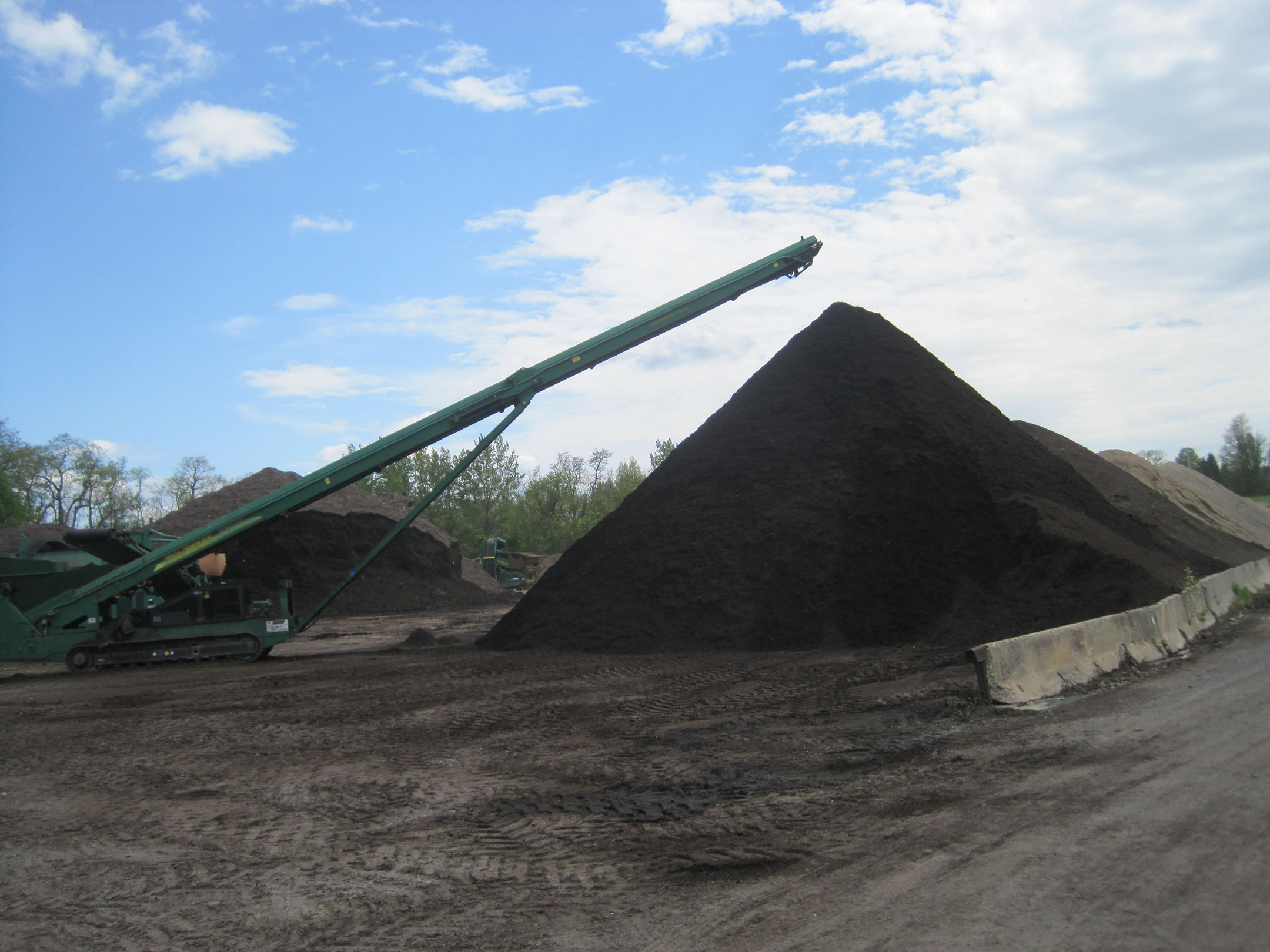
If compost piles are not properly sized and shaped, heat and moisture can get trapped inside and create an anaerobic environment that can produce foul odors and slow down the composting process.
Aerating Piles
Aerating piles involves introducing air/oxygen into compost piles to promote an aerobic environment. By properly aerating compost material piles, bacteria found in anaerobic environments, which can generate unpleasant odors, will be minimized. A final compost product can also be produced more quickly through aerating compost material piles (as compared to piles that do not have fresh air introduced).
There are several methods to introduce air into compost piles. The most common way is to turn piles. Turning piles helps the inner material become more exposed to the atmosphere. When turning piles, it is important to identify nearby sensitive receptors, so as to avoid causing potential nuisance issues. Compost piles should be turned when wind is not blowing towards the sensitive receptors.
Keeping a Balanced Compost Composition
Maintaining a balanced compost mixture, and sometimes excluding certain materials, is another method to reduce odor and create a better finished product. Good compost is composed of the correct ratio of carbon (i.e., dried leaves, hay, and dead plants) to nitrogen (i.e., grass clippings and leaves) to stay active and healthy. Food scraps and grass clippings can quickly lead to the production of foul odors that can cause nuisance situations if not managed properly, particularly when present in larger quantities.
Using Odor Counteractants
If the above BMPs have already been utilized and your compost still smells badly, odor counteractants can be sprayed on piles to help reduce the unpleasant odors while the underlying issues that are causing the odors are resolved.
How Walden Can Help
Walden’s consultants have experience helping composting facilities to manage their organic materials. Our team can work with you on regulatory compliance and permitting issues, waste reduction and processing efficiency, and introducing best management practices. We can also offer support through anticipating and addressing regulatory violations and fines. If your facility needs help with compost odor management, contact our solid waste experts at 516-604-5684.
Contact Walden’s solid waste team at 516-604-5684 to discuss strategies for mitigating or preventing odor issues at your composting facility.