
Narcan in the Dealership: What New York’s New Law Means for Auto Dealers
If you operate a franchised or independent auto dealership in New York State, a new workplace safety law is coming that requires you to keep an opioid antagonist — such as Narcan — on your premises. For most dealerships, compliance is not optional. Here is what you need to know, why it applies to your business, and what steps to take before the December 13, 2026 deadline.
The Federal Foundation: OSHA 29 CFR 1910.151(b)
The Occupational Safety and Health Administration’s General Industry Standard, 29 CFR 1910.151(b), requires that in the absence of an infirmary, clinic, or hospital in near proximity to the workplace, employers must ensure that adequate first aid supplies are readily available and that at least one employee is trained to render first aid.
This standard applies broadly to general industry employers — and auto dealerships are squarely within that category. Your service department, body shop, parts warehouse, and even your sales floor are all covered under the General Industry umbrella. Unless your dealership happens to be located immediately next to a hospital or urgent care clinic — close enough that emergency medical assistance can be reached within three to four minutes — you are required to maintain first aid supplies. In practice, the vast majority of dealerships across New York meet this threshold and are already subject to 29 CFR 1910.151(b), whether they know it or not.
This federal obligation has long been on the books, and most dealerships have at least a basic first aid kit in their service area. What is new is that New York State has now used this federal trigger as the basis for a significant upgrade to what that first aid kit must contain.
The New York Law: S5922-A and A9453
In December 2025, Governor Hochul signed Senate Bill S5922-A, sponsored by Senator Fernandez. This legislation added a new section — Labor Law § 27-f — to New York’s Labor Law. In plain terms, it mandates that any private employer federally required to maintain first aid supplies must also include an opioid antagonist among those supplies.
The bill’s justification pointed to the staggering toll of the opioid epidemic in New York. Overdose deaths in the state increased more than 360% between 2010 and 2021. National surveys have found that more than 70% of employers report that opioids have negatively affected their workforce. An overdose can happen anywhere — including in a dealership service bay, break room, or parking lot — and Narcan, when administered quickly, can reverse the effects of an opioid overdose and save a life.
Shortly after enactment, the legislature recognized that certain technical clarifications were needed, and Assembly Bill A9453 was introduced by Assemblywoman Paulin to address those gaps. Governor Hochul signed A9453 on February 13, 2026. The amendment made several important refinements:
- It explicitly ties the law to the federal Occupational Safety and Health Act of 1970 (Public Law 91-596) and the safety standards issued under it, removing any ambiguity about which federal mandate triggers the state requirement.
- It clarifies that the opioid antagonist must be ‘available for use’ at the workplace — it does not have to be inside every individual first aid kit, only accessible for first aid or emergency treatment.
- It explicitly exempts state and local government agencies from the definition of covered employer, making clear the law applies to private employers like dealerships.
- It provides legal liability protection for employees who administer an opioid antagonist in good faith, treating the act as first aid under the Public Health Law.
- It extended the original compliance deadline from 180 days to one full year, giving employers more time to prepare.
The Compliance Deadline: December 13, 2026
The amended law, Labor Law § 27-f, takes effect on December 13, 2026. That gives New York dealerships the remainder of 2026 to get into compliance. While that may seem like ample time, the New York State Department of Labor — working in coordination with the Department of Health — is required to issue implementing regulations before that date. Those regulations will specify the required number of opioid antagonists based on workplace size, training standards for personnel, and other operational details. Dealers should monitor DOL guidance closely and be prepared to adjust their practices once those rules are published.
What Dealers Need to Do Now
Compliance does not need to be complicated. Here are the key steps every New York dealer should take:
- Confirm your OSHA obligation. Review whether your facility is subject to 29 CFR 1910.151(b). If you have a service department or any workplace operations not adjacent to a hospital, you almost certainly are.
- Obtain an FDA-approved opioid antagonist. Narcan (naloxone) nasal spray is the most practical option for most workplaces. It is available over the counter at pharmacies and does not require a prescription in New York.
- Train your staff to use this lifesaving drug. Designate employees — particularly those in your service and parts departments, and those who deal with the public — to recognize the signs of an opioid overdose and know how to administer the antagonist. While naloxone is incredibly effective when used for opioid overdose, the training ensures that it is administered at the appropriate time and manner to achieve the desired results. It also teaches what to do after the naloxone is administered. Training resources are available through Walden’s Environmental Health & Safety (EHS) team.
- Update your emergency response policies. Document where the opioid antagonist is stored, who is responsible for it, and how it will be accessed in an emergency. Ensure all employees know its location.
- Watch for DOL regulations. The Department of Labor’s forthcoming rules will provide specific guidance on quantities and training requirements. Subscribe to updates from your dealer association and the NYS DOL to stay current.
The Bottom Line
New York’s opioid crisis does not stop at the workplace door, and state lawmakers have made clear that employers — including auto dealers — share a responsibility in the response. Labor Law § 27-f is not an onerous burden; a box of Narcan nasal spray and basic training for key staff members goes a long way toward both compliance and, more importantly, potentially saving a life.
The compliance deadline is December 13, 2026. Dealers should not wait until the last minute, particularly since the Department of Labor’s implementing regulations — which will define the specific quantity and training requirements — are still pending. Early preparation ensures you will have time to adjust if those rules impose additional requirements.
For guidance specific to your dealership’s situation, consult with your employment counsel or contact your regional dealer association. This is one compliance requirement that is both easy to meet and meaningful in its impact.
Contact Walden’s Environmental Health and Safety Director, David Garner, for any additional questions or on-site training at (860) 781-7141 or via email at dgarner@walden-associates.com.
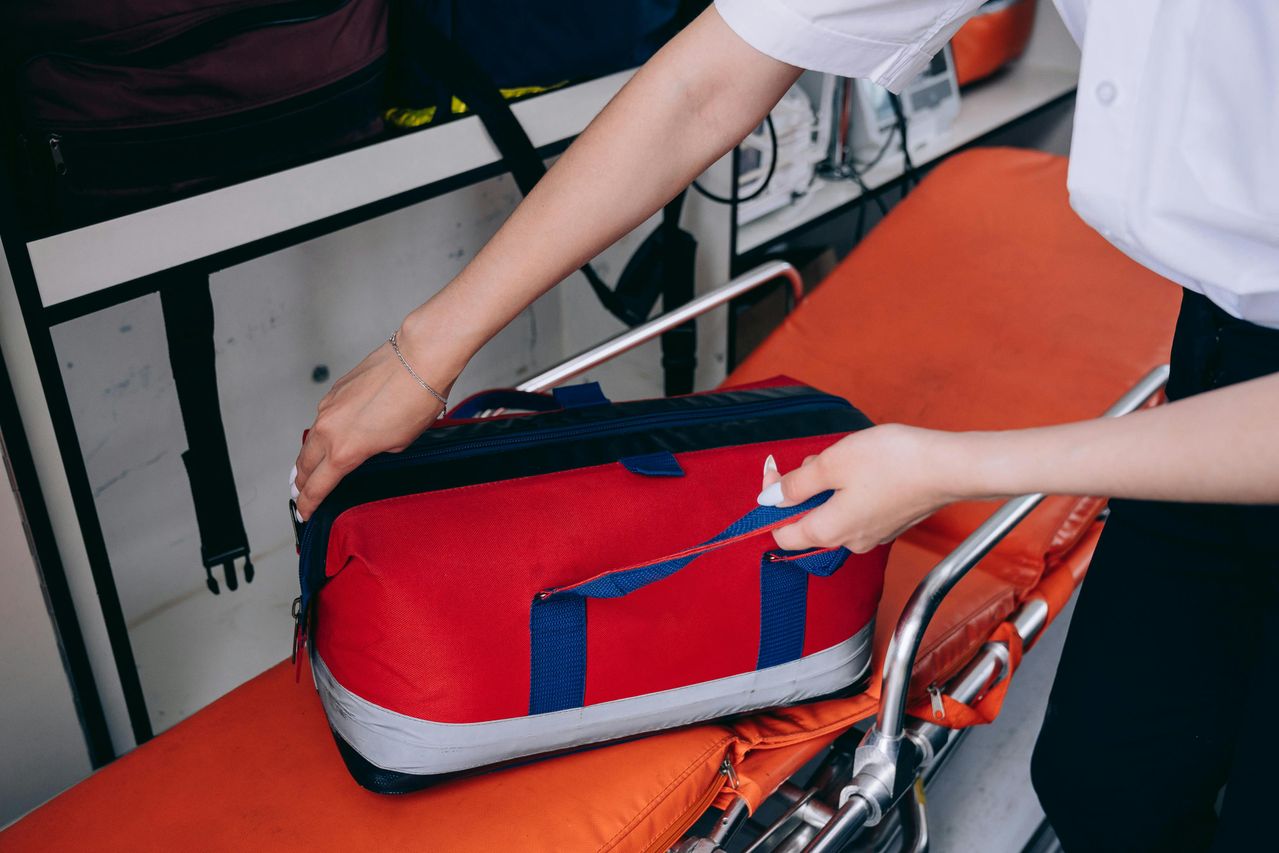
Photo by Mikhail Nilov: https://www.pexels.com/photo/woman-holding-bag-on-stretcher-28123778/
For more information on New York’s naloxone requirements, visit Walden’s previous blog here or contact us at 860-781-7141.