
Industrial Slings: Purpose, Safe Use, and Proper Application
Slings are the most often used under-the-hook lifting devices. They are attached to and hang below the hook on cranes and hoists. Their purpose is to facilitate the lifting, lowering, and movement of suspended loads.
The four most common types of slings include:
- Chain
- Wire rope
- Metal mesh
- Synthetic
There are many configurations, lengths, and attachments possible for each of these basic types.
Each kind of sling has its own pros and cons. Some examples are as follows:
| Sling Type | Pros | Cons |
| Chain | Less prone to damage than synthetic, and damage is easy to see | Heavier than synthetic or wire rope |
| Wire rope | Lighter than chain or wire mesh | Chemicals can damage the core with no outward indication |
| Metal mesh | Used like a synthetic sling, but more rugged and higher capacity | Heavy |
| Synthetic | Light and flexible | More easily damaged |
Every sling type must have the rated capacity attached by a tag, label, or (in case of metal mesh) directly on the handles. As with all lifting devices, if the information (especially the rated capacity) is not legible, the sling must be taken out of service. Other essential information is also attached, depending on the type of sling.
Other reasons for taking slings out of service are:
- Excessive wear of any sling part or attachment
- Deformities such as
- Stretched or bent links on chain slings
- Kinks, broken wires, and corrosion on wire rope slings
- Broken weld or brazed joint along the edge on metal mesh slings
- Rips, tears, or chemical damage on synthetic slings
- Exposure to excessive heat
These are just a few reasons to take a sling out of service. Employees must be trained to look for these and other signs that a sling is not to be used.
The Importance of Sling Training
It may seem simple to use slings with a hoist or crane to lift heavy objects, but it must be done by trained personnel. Do your employees know:
- How to perform a sling inspection (required daily before each use by a competent person)
- When to take a sling out of service
- What type of sling to use for their particular application
- What type of hitch to use (choker, basket, or vertical)
- How the angle of the sling legs affects the sling’s capacity
- That periodic inspections of alloy chain slings by a competent person are required, based on use, recorded, and kept on hand for review by OSHA
- That slings shall not be repaired except by a sling manufacturer or an equivalent entity
You should now have a better understanding of some of the requirements when owning and using slings in your business. Slings are used throughout general industry and construction and sometimes taken for granted. However, misuse, improper rigging, or the use of damaged slings can cause the lift to fail. When this happens, the result may be severe injury or even death.
How Walden Can Help
Have you decided that you:
- Need additional information
- Need assistance choosing the right sling type for your operations
- Need employee training in sling inspection
- Need employee training in rigging and lifting a load
If so, contact Walden’s EHS team at 860-846-4069. We can help you purchase the correct slings for your business and train your employees to keep both your product and your people free from harm.
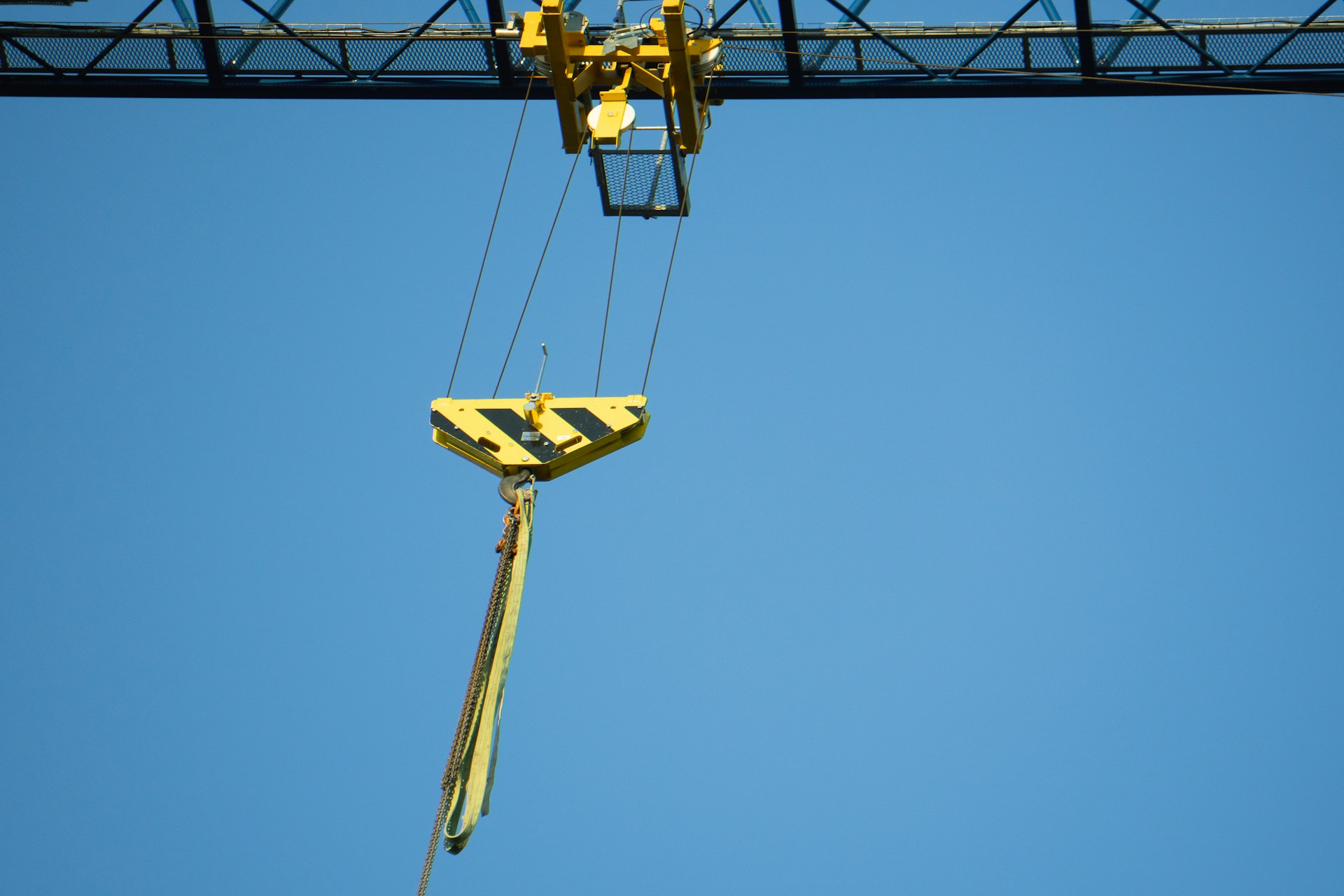
Photo by Rosen Stoyanov on Unsplash
Walden’s EHS team can help you with compliance and trainings for slings and other types of below-the-hook lifters. Contact our safety professionals at 860-846-4069 to discuss your needs today!