
Fire Prevention Month: Spotlight on Walden’s Volunteer Firefighters
 October is widely recognized across the U.S. as Fire Prevention Month. The purpose of this long-running public health campaign is to provide education on the dangers of fires and how to be safe if one does occur.
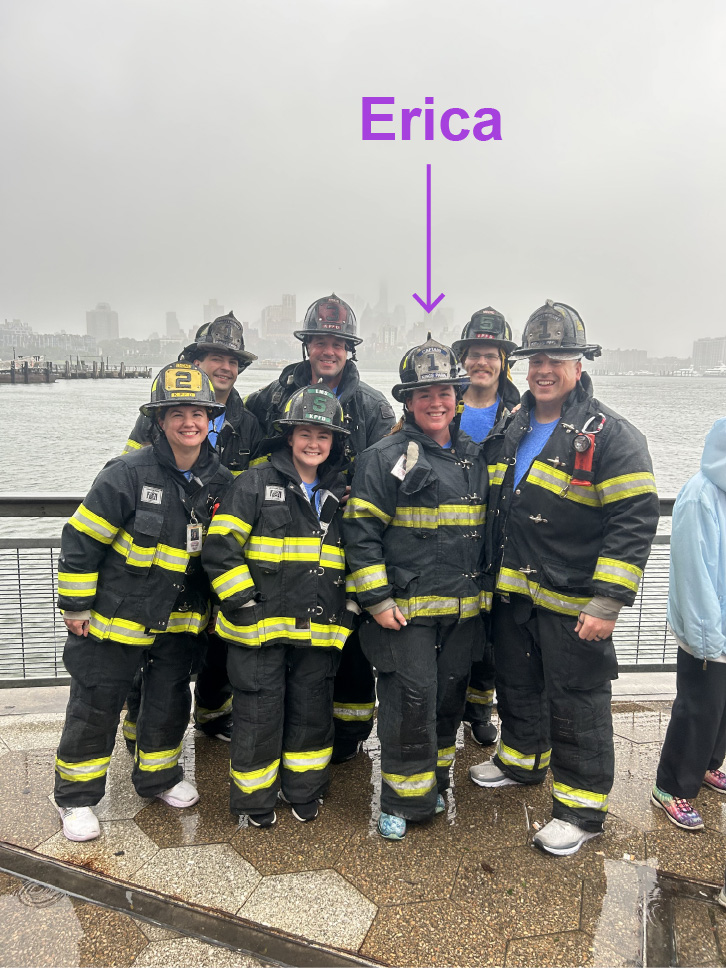
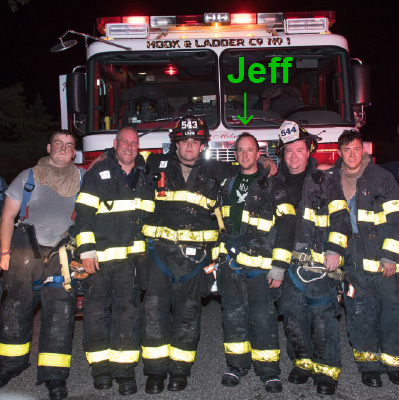
Walden is proud to have two longtime volunteer firefighters on our team, Project Manager Erica Johnston and Business Development & Marketing Manager Jeff Baker, who are both accomplished members of their local departments. In addition, Environmental Health and Safety (EHS) Specialist Eric Ranhorn spent over a decade working as a firefighter earlier in his career.
Below, Erica, Jeff, and Eric discuss their firefighting backgrounds and experience, and each also provides some valuable advice that they have learned through their years of service. Thank you all for sharing and for all you have done (and continue to do) to keep your communities safe, both in your roles at Walden and at the firehouse!
Erica and Jeff – Our Volunteer Firefighters
When did you start firefighting?
Erica: 2013
Jeff: 1992
Where are you currently working?
Erica: Kings Park Fire Department as the Captain of Engine Company 1
Jeff: Locust Valley Fire Department
What drew you to firefighting?
Erica: When I graduated college and moved back to Kings Park, I was seeking a way to help my community. I had a friend in the Department who recommended joining. I joined and initially became an EMT before choosing to complete firefighter training, and I never looked back!
Jeff: Family tradition – my father, brother, and nephew were all active firefighters. My Dad served for 50 years and was a past Chief. I was the first 2nd generation firefighter to hold the position of Chief, like my father before me.
 What do you find most rewarding about being a firefighter?
Erica: The moments you feel like you are helping another person who may be having the worst day of their life, the times that little kids look at you like you are the COOLEST for being a firefighter (and hopefully inspiring the next generation!), and all of the friendships and connections you make with your fellow firefighters. It’s truly a unique bond to be friends with folks who you trust with your life, and then sometimes have to put that to the test when you work together!
Jeff: The camaraderie amongst the firefighting community and helping those in need at their worst moment.
Are there any stories that stick out to you in particular?
Erica: Too many to count, but I am thankful I have the opportunity and ability to serve my Town and the members of KPFD.
Jeff: I responded with my fire department to the Suffolk County wildfires in 1995. We get relatively small brush fires around Long Island, but this was a wildfire like I had only seen on the news out West. Seeing flames rise as tall as 3–4 story buildings and jump a 400-foot-wide span of Sunrise Highway was intense and a bit scary, but the entire Long Island firefighting community banded together over a few days to contain the fires to the Pine Barrens region.
Do you have any safety tips that you can recommend to people in light of Fire Prevention Week?
Erica: When you store chemicals or petroleum products in your home, be sure they are kept in appropriate containers. Organized sheds and garages go a long way with fire prevention!
Jeff: Install smoke and carbon monoxide detectors in your home and test them monthly; when we change the clocks (twice a year), also change the batteries in those detectors. And designate a meeting place for your family outside the home if you experience a fire-related emergency.
 Eric’s Path from Firefighting to EHS
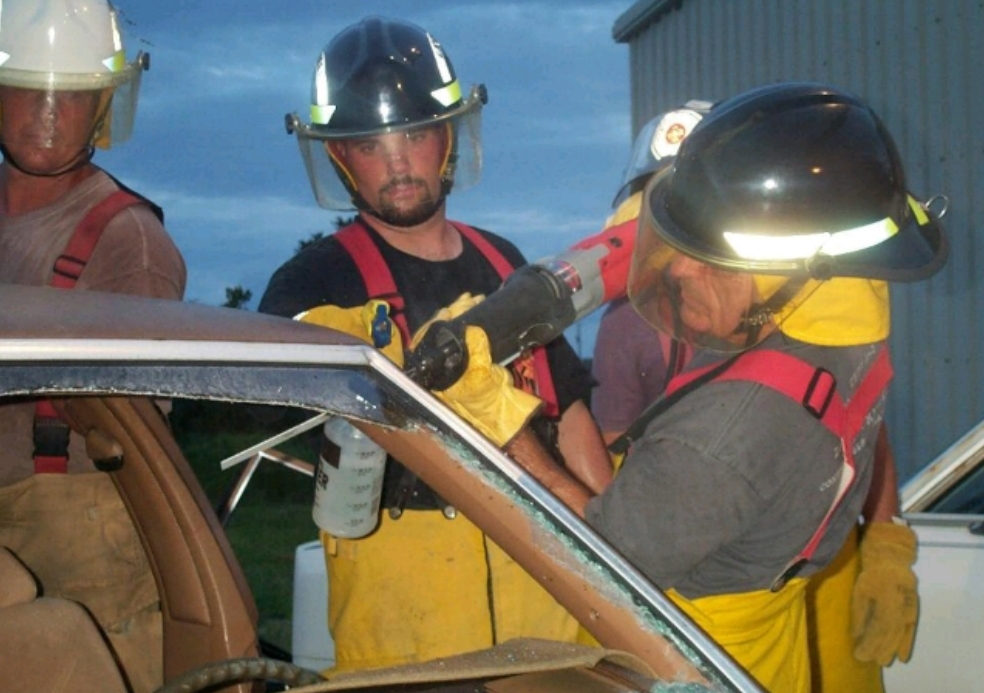
Firefighting runs in my family. My father was a firefighter in Elizabeth City, North Carolina, and he retired from the fire service as a battalion chief. I grew up around the firehouse, and it felt like a second family, so it was natural for me to follow him into the service when I got older.
I started in 2001 with the Chicamacomico Banks Fire Department on the Outer Banks. From there I moved to Nags Head Fire Department and then to Colington Fire Department, where I spent most of my time. During those years I earned my Firefighter I and II and Medical certifications through COA Fire Academy.
In 2008 I moved west to Eden, North Carolina, and served with Eden Fire and Rescue until about 2012. While there, I also completed NC Rescue Technician and Fire Prevention and Safety Technology Training.
What I loved most was the service side of the job. You get to help people on the worst day of their lives, and that stays with you. After all that training and reaching rescue tech status, I moved into industrial safety. I wanted to keep people from ever needing an ambulance because of a bad decision at work. That career took me to job sites across the country, including power plants, the Vogtle 3 and 4 nuclear build in Georgia, federal sites, and pharmaceutical clean rooms. With that much travel, I couldn’t keep up with North Carolina’s fire and medical recertification requirements, so I’m no longer an active firefighter. I did serve on site emergency response teams for high-angle and confined space rescue on several of those projects, and that background still shapes how I approach hot work, confined space, and fire prevention with our clients today.
The biggest lesson I took from the fire service is that most emergencies don’t start as emergencies. At work, they start with a portable heater set too close to combustibles, a fire extinguisher hidden behind pallets or missing its monthly inspection, or hot work done without a permit. A strong hot work program is one of the best fire prevention tools a facility has. That means a permit before work starts, combustibles moved or covered, a charged extinguisher at the work area, and a trained fire watch. The fire watch doesn’t end when the torch goes out. Sparks and slag can smolder unseen in cracks, wall cavities, and floor openings, so the fire watch stays at least 30 minutes after the work is done, and an hour under NFPA 51B. In my experience, that time after the work is finished is when it matters most.
The same lessons apply at home. Space heaters cause a large share of home heating fires, so keep them at least three feet from anything that can burn. Plug them directly into the wall, not into an extension cord, and turn them off when you leave the room or go to bed. Keep a fire extinguisher in the kitchen and another near the garage or workshop. Check the gauge once a month, and make sure everyone in the house knows how to use it with the PASS method: Pull the pin, Aim at the base of the fire, Squeeze the handle, and Sweep side to side. Growing up in a firefighter’s house, I learned early that the best fire is the one that never starts.