
Walden Assists Municipalities with Risk Analysis Component of the NYS Asset Management Program
New York State Asset Management Program for Publicly Owned Treatment Works
Walden is continuing work on Asset Management Projects (AMPs) for municipalities throughout the Hudson Valley and New York State’s Capital Region. To learn more about what an AMP is and how Walden is working with the New York State Department of Environmental Conservation (NYSDEC) and the New York State Environmental Facilities Corporation (NYSEFC) to further develop AMP programs in New York, see our previous blog.
Walden has discussed many components of AMPs, such as Asset Inventories and Condition Assessments, Developing Level of Service (LOS) Goals, Developing Staffing and Retention Plans, and Developing Capital Improvement Plan and Rate Analysis Toolboxes, in other past blog posts. Today, we will cover the Risk Analysis component of AMPs. Risk analysis includes three areas of focus, which are described in detail below.
1. Consequence of Failure
The first area of focus of a risk analysis is Consequence of Failure (COF). COF refers to the potential impact to the level of service goals when an asset is unable to meet performance expectations or is unexpectedly taken out of service.
Since assets serve different purposes, the impact of failure of each asset affects the level of service goals in different ways.
A COF analysis begins with the assessment of each asset across four different service categories, including:
- System reliability
- Health and safety
- Regulatory compliance
- Fiscal impact
This assessment is then compared to service goals in order to properly determine a COF. The scores for the assessment, which measure the impact of loss of the asset, range from negligible to severe, where negligible receives a numerical score of 1 and severe receives a numerical score of 10.
For example, the scale for system reliability starts at a numerical score of 1. This score would be assigned for assets that the system can operate without for one month or more, and indicates that the impact of loss of the asset is negligible. A numerical score of 10 is at the other end of the scale; this would be assigned for assets that must be replaced within an hour, so a 10 indicates that the impact of losing this asset is severe.
2. Likelihood of Failure
The second area of focus for asset risk analysis is Likelihood of Failure (LOF). LOF is used to estimate when an asset will no longer be able to perform as required, which results in a negative impact to the level of service. LOF is comprised of each asset’s service life and remaining useful life.
Service life refers to the design life of an asset, which is initially determined by the manufacturer, seller, or distributor. In some instances, best professional judgment must be used to make an estimate of the remaining service life – for example, if the asset was installed many years ago and the documented service life is not readily available.
Age alone is not enough to tell how much life or serviceable years an asset has left; this is where remaining useful life comes in to play. The remaining useful life considers factors such as age, service life, operating environment, maintenance, quality, and condition to develop an estimate of an asset’s expected end of life. Due to environmental or operational conditions and maintenance, an asset may show reduced performance earlier than anticipated – or on the other hand, assets may continue to perform longer than expected.
After the service life and remaining useful life of an asset are determined, the LOF can be calculated. The LOF equation calculates the fraction of life consumed and then brings the value to a common scale.
3. Risk Scoring
The final component of asset risk analysis is Risk Scoring. AMPs look at risk as the probability of a disruption to the level of service of an asset. In order to determine a risk score, both of the previous components (COF and LOF) are considered in a standardized risk assessment to give each inventoried asset a risk score. This ultimately results in the identification of critical assets.
Risk is scored on a 100-point scale, where assets with higher risk have scores closer to 100. These higher-scoring assets are then identified as critical assets, and may need to undergo more preventive maintenance or be replaced sooner than expected.
How Walden Can Help
The key to a properly developed AMP is to have engaged and knowledgeable individuals construct a comprehensive plan, which can be easily communicated and understood by all, with specific personnel assigned specific duties and responsibilities. The AMP is a living document, which should be reviewed and updated regularly.
The experienced team of AMP professionals at Walden can help develop and maintain an asset management program specifically tailored to your needs. To read about some of Walden’s related work involving asset management tasks, please visit our utility valuation and asset management planning services page. For more information about asset management programs or related tasks, contact Walden at 516-559-6976 to connect with an experienced AMP specialist today.
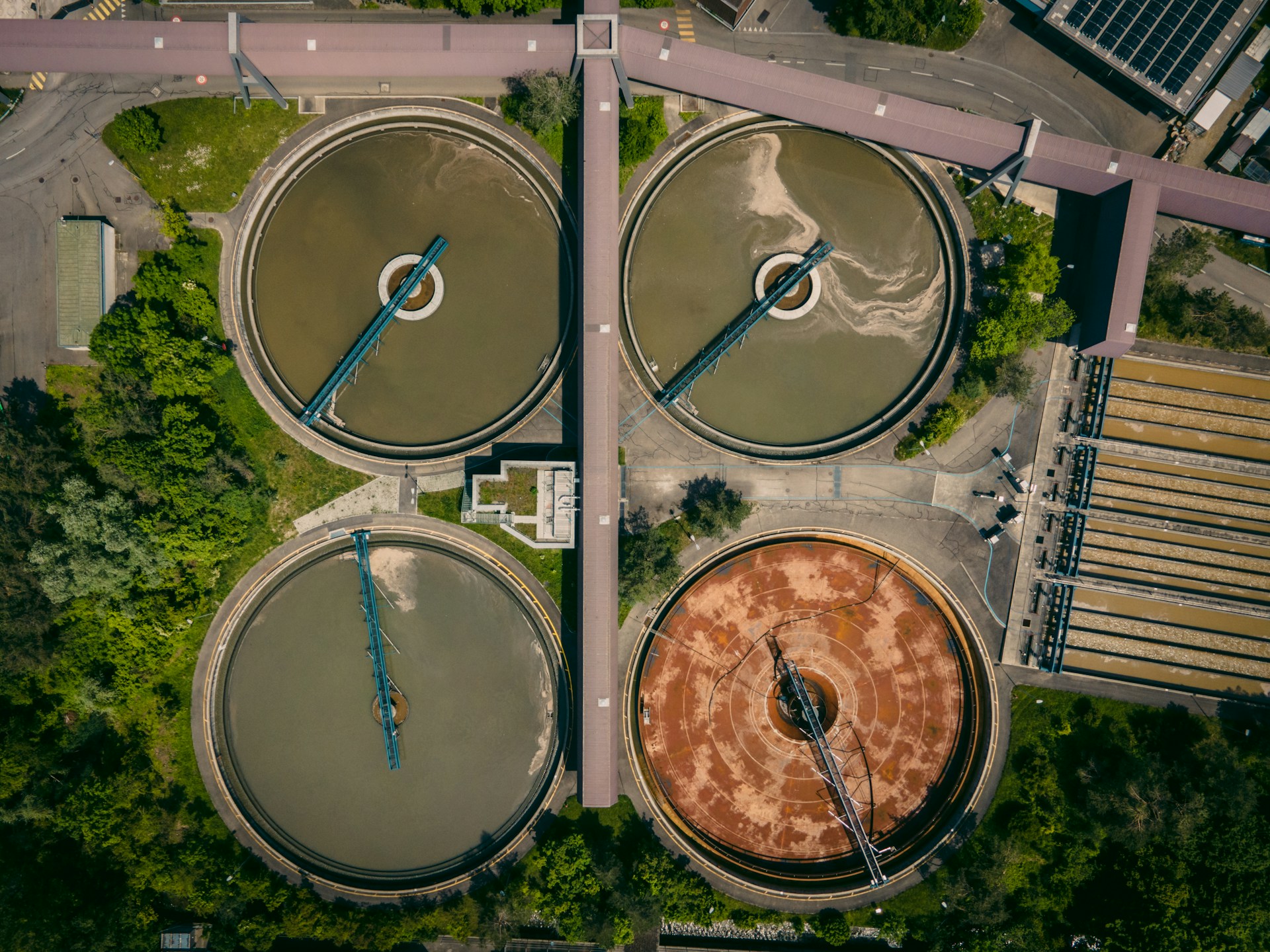
Photo by Patrick Federi on Unsplash
Contact Walden’s asset management planning experts at 516-559-6976 to learn more about developing a program for your municipality!