
The Importance of Respirator Fit Testing
If your workplace has determined that respirators are required personal protective equipment (PPE), very few things are more critical than making sure your respiratory protection is actually protecting you.
Whether you’re a laboratory technician, construction worker, healthcare professional, or work in manufacturing, welding, sanding, or coating, airborne hazards are often present in the workplace. If your job involves exposure to airborne hazards, respirators are your last line of defense after all other options have been exhausted. However, your respirator only works if it fits properly.
What Is Respirator Fit Testing?
Respirator fit testing is a process used to make sure that a tight-fitting respirator, such as an N95, half-face, or full-face respirator, forms a proper seal on the user’s face. Even small gaps can allow harmful dust, fumes, vapors, or particles to sneak in, making the respirator ineffective and providing a false sense of security. This leads to increased risk of exposure and can result in long term health conditions such as occupational asthma, chronic bronchitis, COPD, and even cancer.
The Two Types of Testing
- Qualitative Fit Testing: Pass/fail method relying on the wearer’s sense of smell and taste (through use of test agents like saccharin or Bitrex) to detect any leakage.
- Quantitative Fit Testing: Performed through the use of a machine that measures the actual amount of leakage into the respirator and then provides a numerical result called a “fit factor.”
OSHA’s 1910.134 regulation mandates annual fit testing for anyone who is required to wear a tight-fitting respirator at work. This ensures that workers are protected from hazards such as infectious diseases, toxic dust and fumes, chemical vapors and gases, and silica and asbestos particles. Testing must be done more often than annually if there are significant facial changes due to weight gain/loss, facial surgery, dental changes, or scarring.
Facial hair will interfere with the seal so having a clean-shaven policy in place where respirators are used is very important. Clean shaven means no hair below the jaw line, and none on the cheeks/jaw where the mask seals. This needs to be maintained any time that a respirator is worn, not just during the fit testing.
Fit testing is not just a checkbox on a safety checklist. It’s legally required. If you need help with writing or implementing a respiratory protection program, performing fit testing on your site, or training your staff, give Walden’s EHS team a call at 860-846-4069.
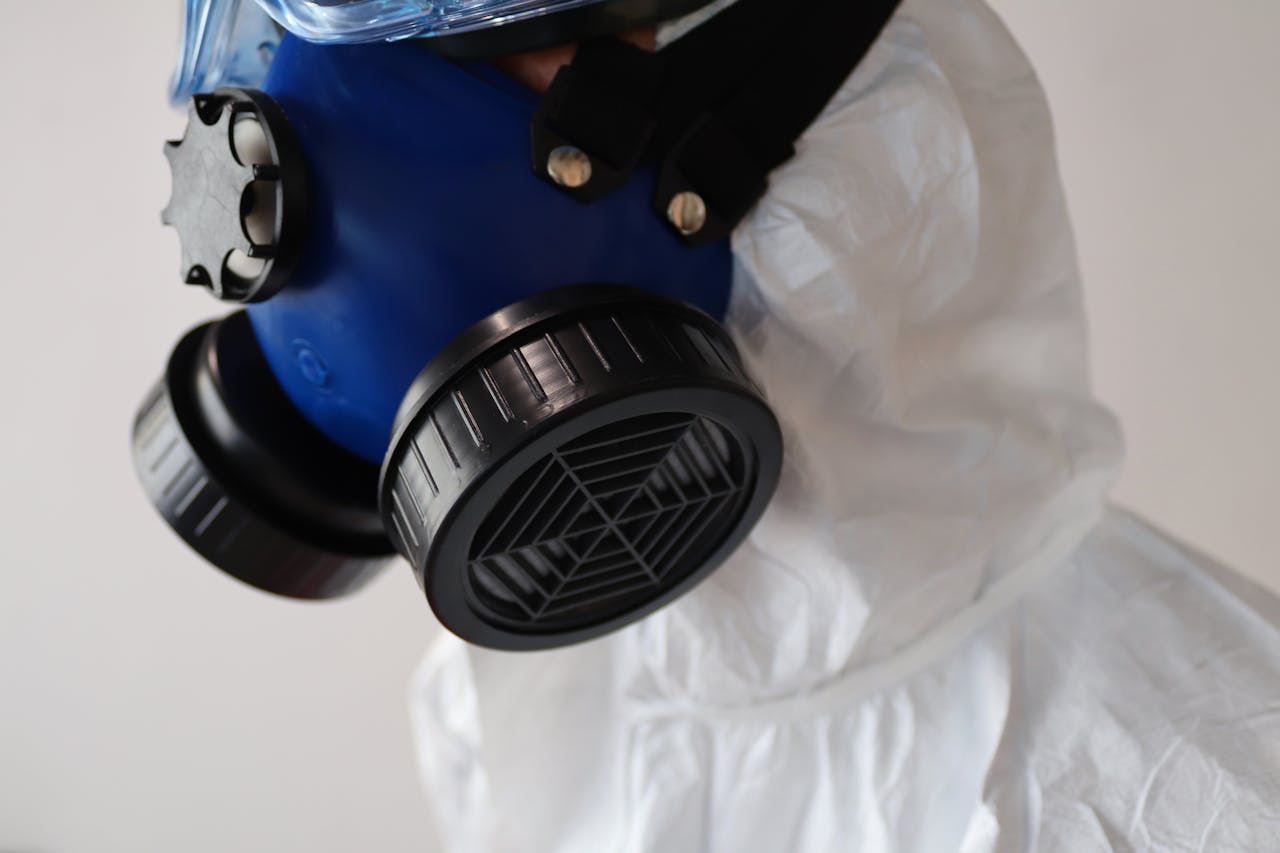
Photo by Roger Brown: https://www.pexels.com/photo/person-wearing-mask-5499417/
Contact Walden’s EHS specialists at 860-846-4069 for help developing a strong respiratory protection program.